Works and artists6 min read
Osman Hamdi Bey's The Tortoise Trainer and the Turn in Ottoman Painting
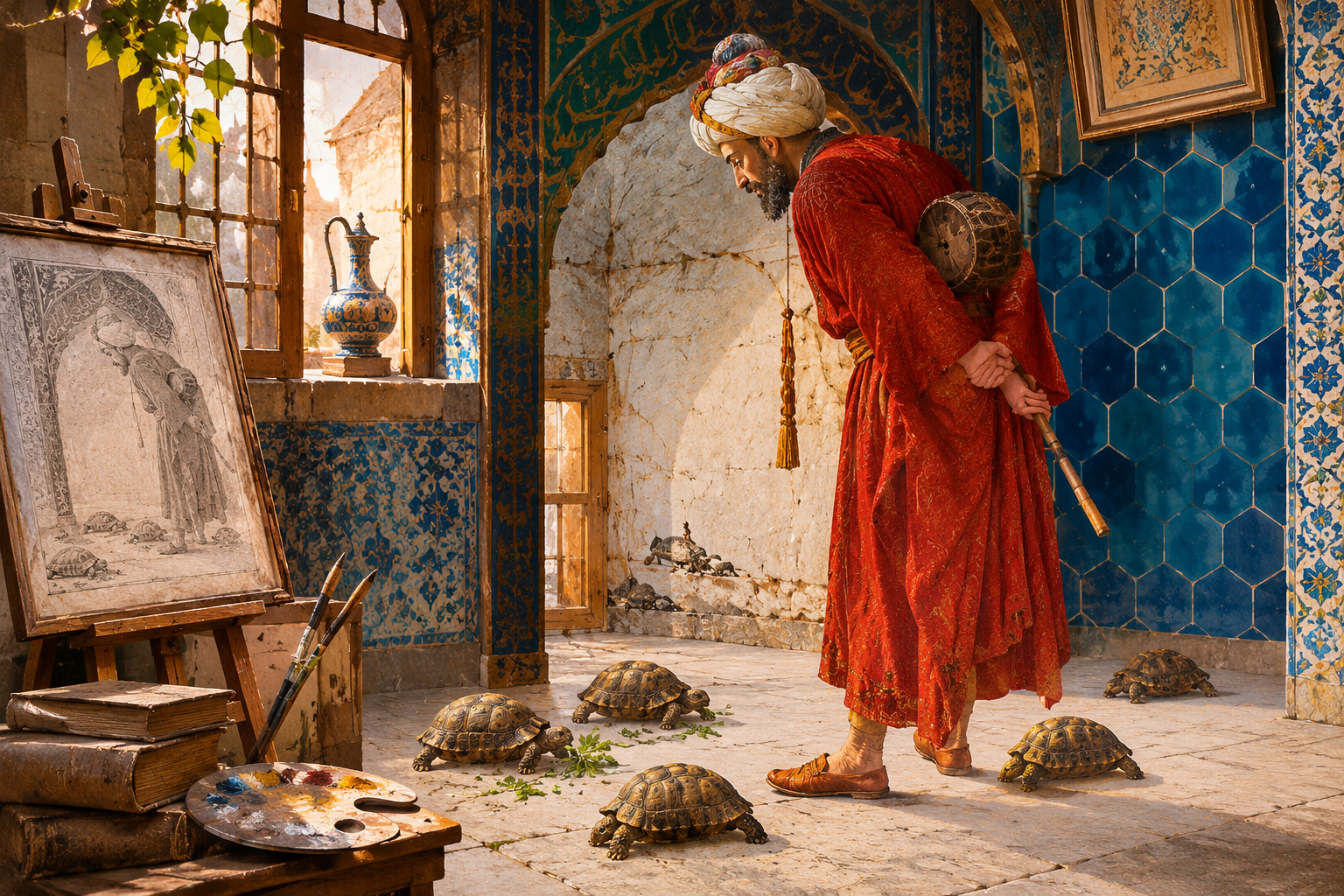
The Tortoise Trainer is the canvas Osman Hamdi Bey painted in oil in 1906 and painted again a year later. It is the best-known picture from the years when Ottoman painters put their own subjects into a Western technique. The two versions hang today in two separate museums in Beyoğlu.
MuseConnect editorsPublished
In this guide · 9 sections
This guide sets the two versions side by side, then looks at how the picture was painted and at the readings people still argue over. It also sketches, briefly, how Ottoman painting moved from the manuscript page to the canvas.
When and where was The Tortoise Trainer first shown?
The first version was finished in 1906 and shown in Paris the same year. It went into the Salon of the Society of French Artists, which opened at the Grand Palais on 1 May 1906, under the title L'homme aux Tortues, "The Man with the Tortoises." The gazette of the Ottoman Painters' Society called it "Tortoises and a Man." The name we use now, The Tortoise Trainer, settled later.
That first canvas is a vertical picture about 2.2 metres tall. The scale alone takes it far from a miniature, which had to fit on a book page.
Who was Osman Hamdi Bey?
Osman Hamdi Bey (1842–1910) was a painter, an archaeologist and a museum man. As a young man he studied painting in Paris with Jean-Léon Gérôme. He directed the Müze-i Hümayun, the Imperial Museum, which is now the Istanbul Archaeological Museums. The School of Fine Arts he founded in 1883, the Sanayi-i Nefise, continues today as Mimar Sinan Fine Arts University.
What is different in the two versions?
The difference everyone notices first is the number of tortoises. The 1906 picture has five. The 1907 picture has six. The second is smaller than the first, and it hangs in a different museum.
| 1906 version | 1907 version | |
|---|---|---|
| Tortoises | 5 | 6 |
| Size | About 2.2 m tall | 136 x 87 cm |
| Where it hangs | Pera Museum | Türkiye İş Bankası Painting and Sculpture Museum |
Both pictures are set in a room of the Green Mosque in Bursa, and the two compositions stay close. In the second, a framed piece of calligraphy hangs on the wall to the trainer's right, and a pitcher sits by the window. A dedication in the painter's own hand is on this version too.
How was the picture painted?
The Tortoise Trainer is oil on canvas. Oil dries slowly, so a painter can lay colour down in layers and soften the passage from one light to the next. That is a different visual language from the flat fields of colour in a miniature.
The light, the perspective and the figure belong to European academic painting. The subject belongs to the Ottoman world: a dervish in a red robe, holding a ney, in a mosque room in Bursa. A small drum, close to a nakkare, rests on his back.
Despite the title, the tortoises are not being trained so much as eating the greens on the floor. The trainer watches them, thinking.
How did Ottoman painting leave the miniature?
Through the nineteenth century, Ottoman painting moved from the miniature bound to the book page toward oil on canvas. The change runs from drawing lessons in the military schools to the founding of the Sanayi-i Nefise. Osman Hamdi Bey is the best-known name in that stretch of time.
The main differences are these:
- Scale. A miniature fits on a book page. A canvas is hung on a wall and looked at on its own.
- Perspective. In a miniature the room is built like a flat surface. In an oil painting, depth and the play of light and shadow come forward.
- Subject. Miniatures mostly tell historical events and scenes of the court. In the newer painting, landscape, portrait and everyday life become common.
- Technique. Miniatures are ink and gouache on paper. The newer painting uses canvas and oil.
The Tortoise Trainer is a compact example of that change. A Western technique and an Ottoman subject meet on one canvas.
What does The Tortoise Trainer mean?
There is no single settled reading. The most common one takes the trainer as a tired intellectual trying to modernise a society that lags behind, and the tortoises as that society resisting change.
Other readings have been put forward. One says Osman Hamdi painted himself as the trainer and cast subordinates who would not adapt to his way of working as the tortoises, a satire. Another suggests the animals came from tortoises he had seen on the streets of Paris.
Historians such as Edhem Eldem treat part of this as over-reading. It is sounder to leave the picture open to more than one reading than to pin it to a single message.
What may have suggested the picture?
A likely source is an engraving called Charmeur de tortues, published in 1869 in the French magazine Le Tour du Monde. It accompanies an essay by the Swiss diplomat Aimé Humbert on his impressions of Japan, and it was drawn after a Japanese print. The text speaks of Korean tortoise charmers. In the engraving a man plays a small drum while tortoises climb onto a table.
That same year Osman Hamdi wrote to his father from Baghdad and said he was reading the magazine. The detail makes the link plausible. It is not proof. The painting itself came about thirty-seven years after the engraving.
Where can you see both versions?
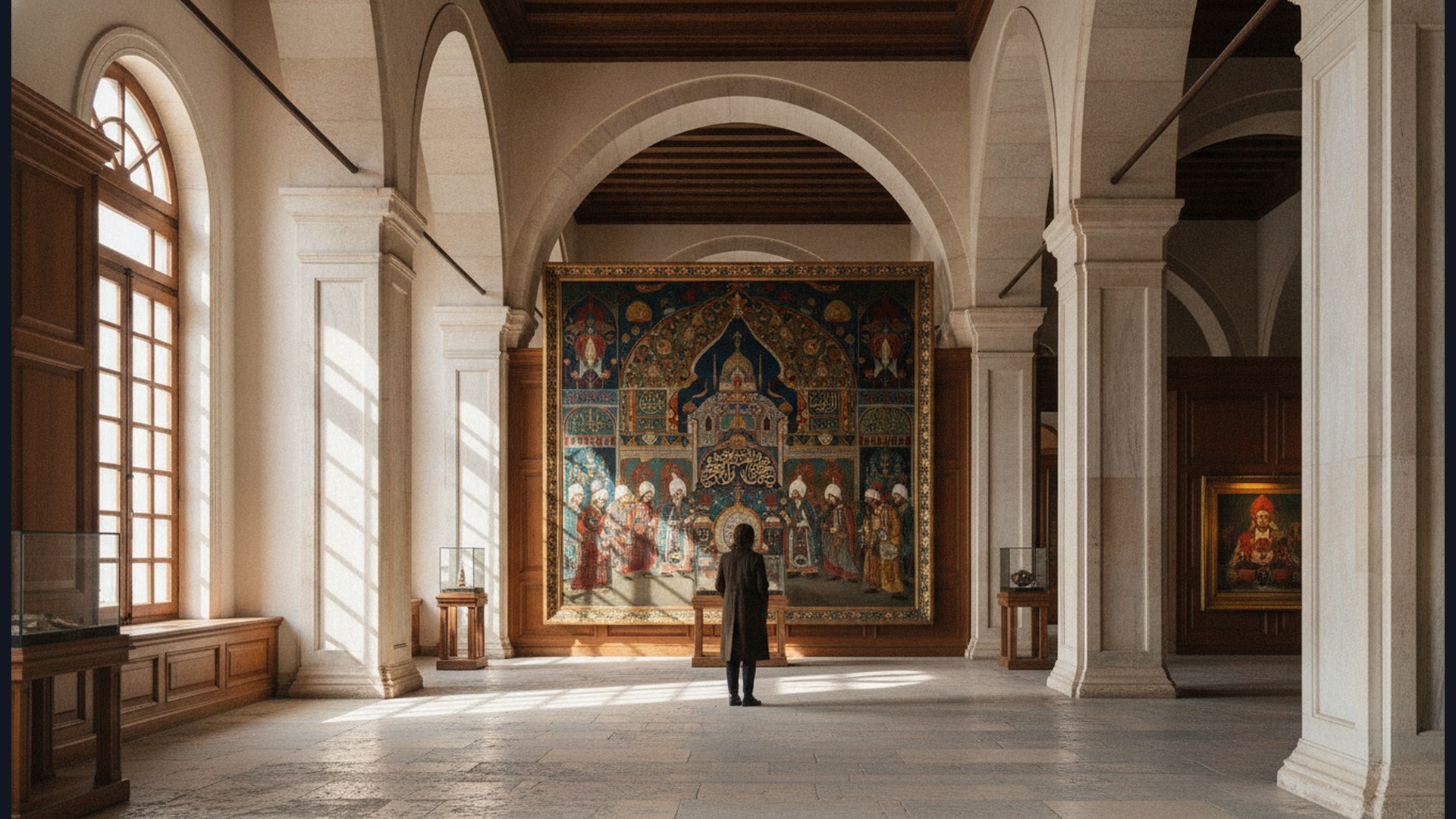
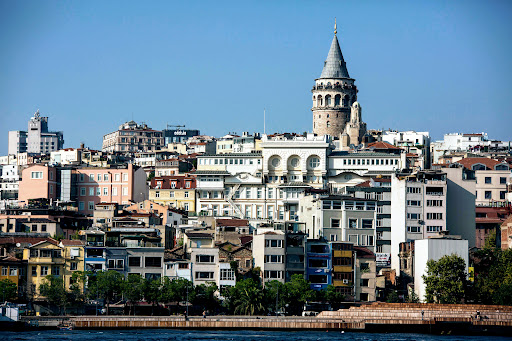
The 1906 version is at the Pera Museum. The 1907 version is at the Türkiye İş Bankası Painting and Sculpture Museum. Both are in Beyoğlu, and the two can be seen in one day. The second version has been on view at the museum on İstiklal Avenue since March 2024.
Seeing them on the same day is the easiest way to compare the number of tortoises and the small details of the room. For the current hang, check the museums' own sites. You can see where the Museum Pass is accepted in the Museum Pass lookup.
FAQ