Works and artists7 min read
The Meaning and Importance of Ottoman Painting
Ottoman painting shows where the Western academic tradition met the Ottoman world in the 19th century. These works are not only visually beautiful. They are layered, open to interpretation, and they record dress, interiors, the push to modernize, and the artists’ own world. This guide explains how Ottoman painting emerged, what to look for, and where to see it in Istanbul.
MuseConnect editorsPublished
In this guide · 8 sections
The historical setting
For the Ottoman Empire, the 19th century was a period of modernization and reform. Western-style painting entered in the same years, first through military schools. The first Ottoman painters trained in that manner were military-school students, later called the “soldier painters.” That first generation worked mainly on landscape and still life. Artists such as Şeker Ahmed Pasha and Süleyman Seyyid were sent to Paris to study; Şeker Ahmed Pasha opened Turkey’s first painting exhibition in 1873.
The next generation widened the subjects. Portrait and the figure became part of Ottoman painting. Osman Hamdi Bey (1842–1910) is regarded as the first painter to use the figured composition in Turkish painting. Halil Pasha went to Europe in 1868 and worked in French studios, while Hoca Ali Rıza never left for Europe. Both are important names of the period for landscape and figure.
A short note: in this guide, “Ottoman painting” means canvas pictures made in a Western manner by Ottoman painters in the 19th century and the early 20th. The miniature tradition is a separate field. European Orientalist painters who depicted the Ottoman world are also distinct from Ottoman painters, though museums often hang them side by side.
Symbolism and how to read the pictures
Details in Ottoman paintings often carry the story forward. Rather than assigning one hidden meaning to every detail, read the work together with its artist, its date, and its subject.
Dress and social standing
In Osman Hamdi Bey’s pictures, clothing and textile details are read as cultural signs of the period. The change in dress that came with 19th-century reforms makes the paintings a place to follow social change. Clothes hint at a person’s office, position, and the fashion of the time.
Space, tile, and carpet
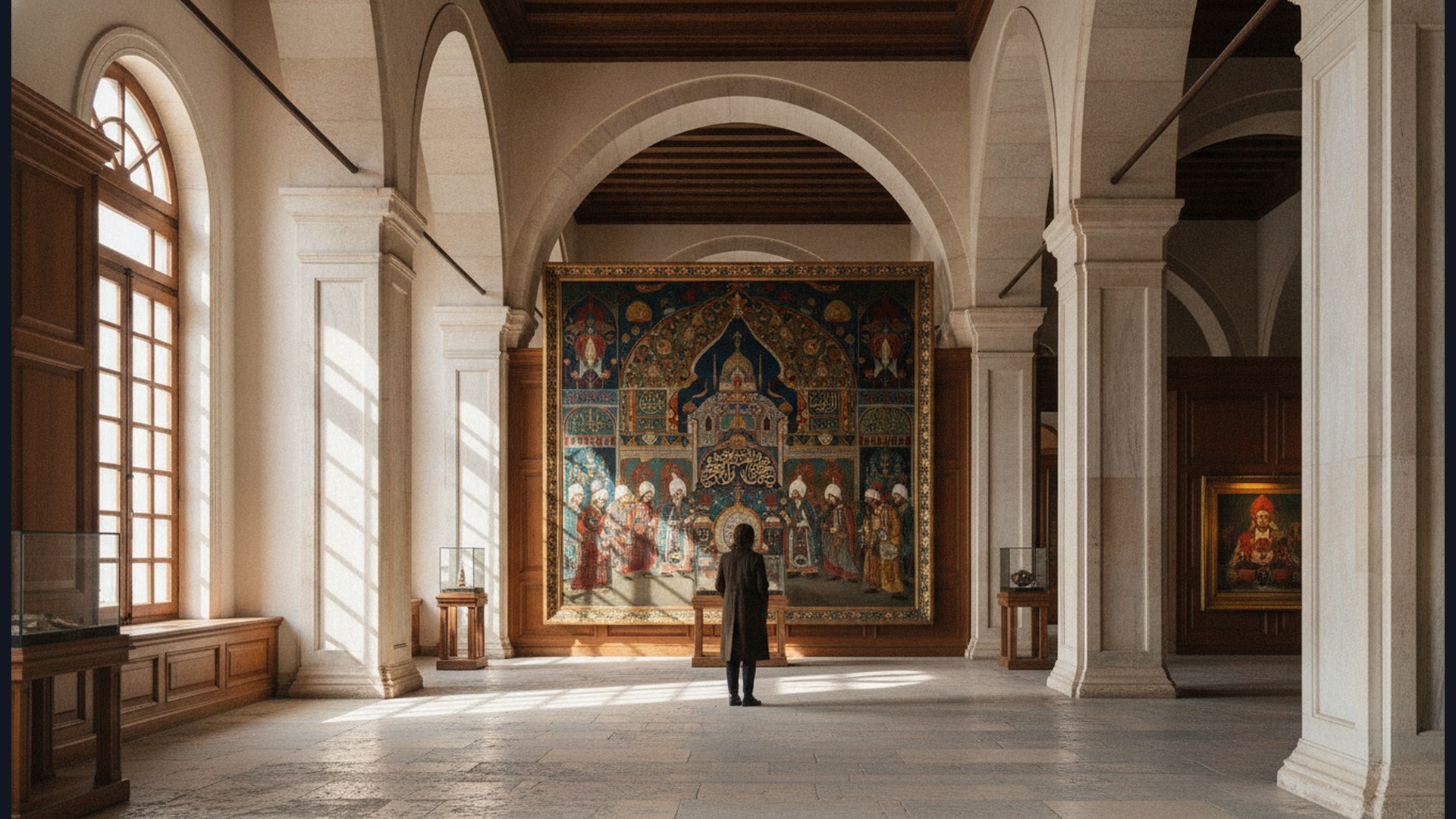
Osman Hamdi Bey built his pictures from architectural detail, historical objects, clothing, and photographs. Carpets appear often in the interiors, and tile becomes more prominent in the later pictures. These details make the scene convincing and record the taste of the period.
Objects, and room for interpretation
Weapons, musical instruments, books, and flowers complete the narrative. Some works support allegorical readings: The Tortoise Trainer, for example, is interpreted as an allegory of Ottoman modernization. Those readings are art-historical interpretations, not settled facts. For color, too, it is sounder to look at the artist’s choices and the museum label than to assume a fixed dictionary of symbols.
Technique
The technique of Ottoman painting rests on the Western academic tradition. Osman Hamdi Bey worked in Paris in the studios of Jean-Léon Gérôme and Gustave Boulanger; Şeker Ahmed Pasha studied with the same two painters in Paris. That training shows in figure drawing, perspective, light, and composition.
This realist manner is a different approach from the miniature tradition, which lost its former importance as Western-style painting spread. In Osman Hamdi Bey’s pictures the figure, the space, and the objects are handled with care. He also used photographs. The paintings are therefore both observed scenes and constructions in which separate elements are deliberately brought together.
Not every painter took the same path. Halil Pasha and Hoca Ali Rıza worked outdoors in daylight and moved toward an Impressionist understanding. Osman Hamdi Bey, in 1882, founded the School of Fine Arts (Sanayi-i Nefise Mektebi) and helped make art education an institution.
Social criticism
Not every Ottoman painting contains social criticism. The landscapes and still lifes of the first generation usually have another purpose. The figured works of painters such as Osman Hamdi Bey do, however, leave room to comment on the social and intellectual climate of the time.
Osman Hamdi Bey painted in an Orientalist manner under the influence of his teacher Gérôme, while showing Ottoman people in more active and intellectual roles. The Met’s 2026–2027 exhibition treats his pictures as a response to the exoticizing “East” of Western Orientalists. That reading shows the paintings can be discussed as works that join the arguments of their time, not only as decoration. Critical meaning is not equally present in every picture, and it stays open to interpretation.
Where to see them
In Istanbul, works by Ottoman painters are in more than one museum. The Orientalist Painting Collection at Pera Museum holds pictures by European painters of the Ottoman world together with works by Osman Hamdi Bey; the famous Tortoise Trainer is in that collection. The painting collection of Sakıp Sabancı Museum brings together leading names of 19th-century Ottoman painting: Osman Hamdi Bey, Şeker Ahmed Pasha, Süleyman Seyyid, Halil Pasha, Hüseyin Zekâi Pasha, and Hoca Ali Rıza. The collection of the Türkiye İş Bankası Painting and Sculpture Museum holds nearly 2,800 works, including pictures by Osman Hamdi Bey, Şeker Ahmet Pasha, and Hoca Ali Rıza. Its permanent display was renewed in 2026.
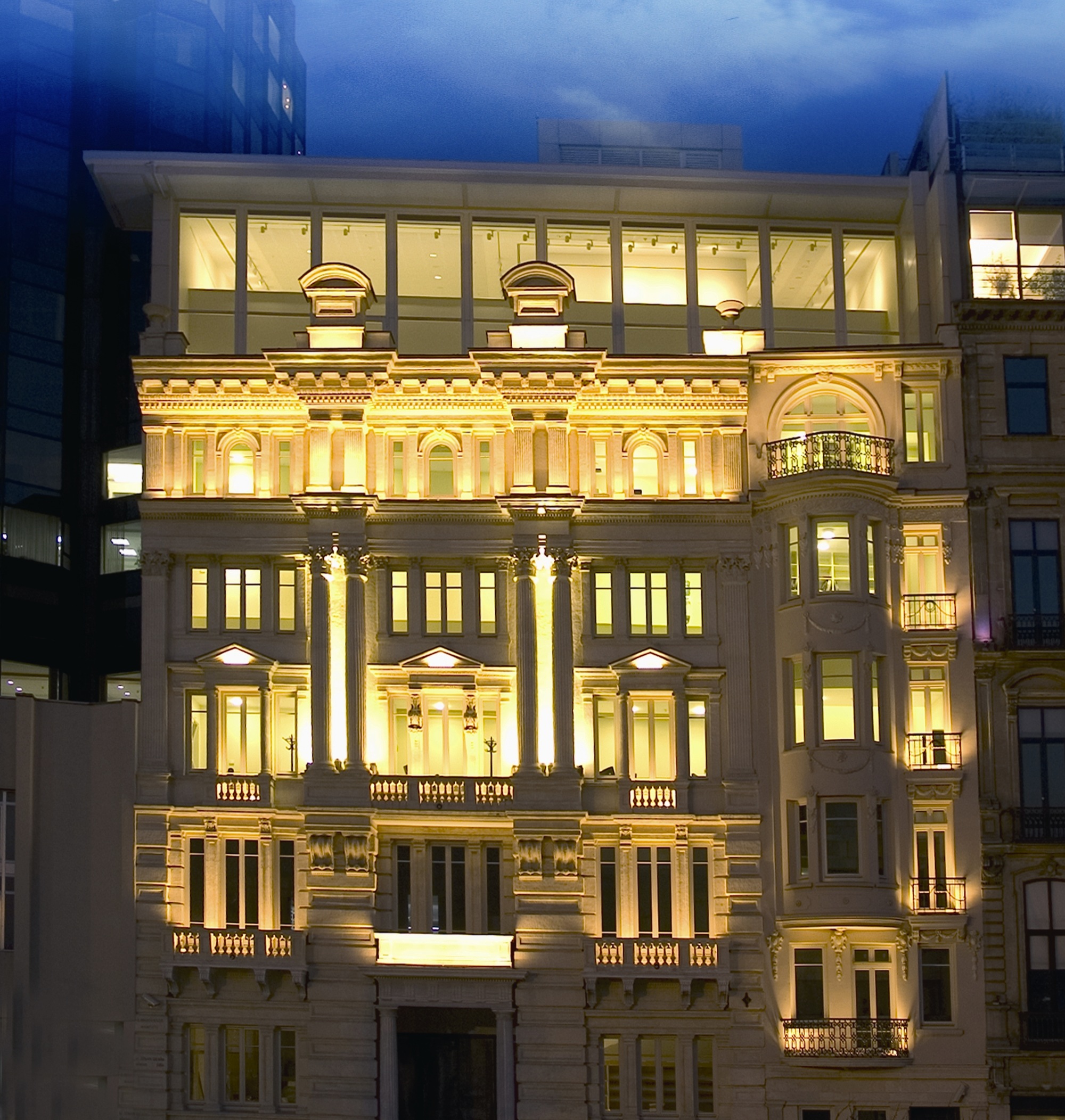 Museum Pass not validNot validPera MuseumBeyoğlu, İstanbulMuseum page
 Museum Pass not validNot validSakıp Sabancı MuseumAvrupa Yakası, İstanbulMuseum page
 Osmanlı Padişahları Tarih Şeridi - BilecikBilecikMuseum page
Why they matter now
Ottoman paintings are sources for both art history and cultural history. They show how cultures met and how artists interpreted new influences. Current international attention to Osman Hamdi Bey is one example: The Met’s exhibition “Orientalism: Between Fact and Fantasy,” from 12 June 2026 to 28 February 2027, presents his works alongside Gérôme and other painters of the period. In Istanbul, his pictures can be seen in Pera Museum’s collection displays.
Art historians and researchers of dress and architecture use these paintings to understand the period. A painting is not a literal record. It is a scene the artist chose and arranged, so it should be read together with other documents.
Practical tips
- Knowing the historical setting helps. Look at the political and social events of the years when the picture was made.
- In the museum, notice clothing, carpets, tiles, and architectural detail. Compare what you see with the label and the curator’s text.
- Learn where the painter trained: in Paris, or in Istanbul’s military schools. That makes the technique and the subject easier to read.
- Pera Museum’s Orientalist Painting Collection also includes European painters. Use the artist’s name on the label to separate them from Ottoman painters. Permanent and temporary hangs change, so check the museum’s official site before you go.
- Seeing the original before buying a reproduction is worth it: scale and detail are hard to judge from a copy.
FAQ