 MüzeKartGeçerli
Fethiye Letoon Archaeological Sitevisitor guide.
Along the Kaş–Fethiye highway, 50 km from Kaş, a 4-km road turning off near Kınık leads to the ruins of Letoon in Bozoluk Village. Letoon is a sanctuary city founded in honor of Leto, mother of Apollo and Artemis. Zeus, supreme among gods, lost his heart to lovely-haired Leto, daughter of Titans Coeus and Phoebe. He possessed Leto like other loves, leaving her pregnant. Zeus's jealous wife, Goddess Hera, pursued Leto step by step to prevent her from giving birth to Zeus's offspring. At last Leto fled to Lycia in Anatolia, escaping Hera. While it is said she bore Artemis and Apollo on Delos Island, one legend holds that she gave birth to Apollo in Patara. When Apollo's cult spread across Greece, numerous places invented legends to claim the honor of being the god's cradle. Delos is connected with such a legend. What could be more natural than Sun God Apollo originating from Lycia, the land of light? Indeed, one of his titles is Lykios. Letoon Theater (Roman Era) Artemis is a continuation of Kybele, Anatolia's mother goddess, and represents her name in these ages; the statue of Artemis in Ephesus symbolizing fertility clearly demonstrates this. Leto, mother of these deities, is likewise considered Anatolian and identified with Kybele. Founded in Leto's name, Letoon served as the religious sanctuary of Lycia. Excavations initiated in 1962 by Prof. Dr. H. Metzger and continued by Christian Le Roy brought the city to light, revealing history dating back to the 8th century BC. The most conspicuous remains in Letoon are undoubtedly the three temples here. Among them, the westernmost temple belonging to Leto was built toward the late 5th/4th century BC through the initiative of King Arbinas. The surviving ruins reflect a temple rebuilt over it around 150 BC in the Ionic order with 6x11 columns. Beside it, the central temple from the 4th century BC belongs to Artemis. The eastern Doric temple belongs to Apollo. A mosaic in the cella of this Hellenistic temple, now severely ruined, portrays Artemis's bow and quiver and Apollo's lyre. Nearby, a momentous trilingual inscription in Greek, Aramaic, and Lycian was discovered. Being a decree of Pixodarus, Satrap of Lycia and Caria, dated to 358 BC, this inscription proved crucial for deciphering the Lycian language and is now in Fethiye Museum. Letoon survived until the 7th century AD before being abandoned. DOWNLOAD MUSEUM BROCHURE NEARBY MUSEUMS AMYNTAS ROCK TOMB FETHİYE GEMİLER ISLAND KAYAKÖY ARCHAEOLOGICAL SITE KAUNOS ARCHAEOLOGICAL SITE AND ROCK TOMBS FETHİYE MUSEUM PINARA ARCHAEOLOGICAL SITE TLOS ARCHAEOLOGICAL SITE
Let AI build your tour plan
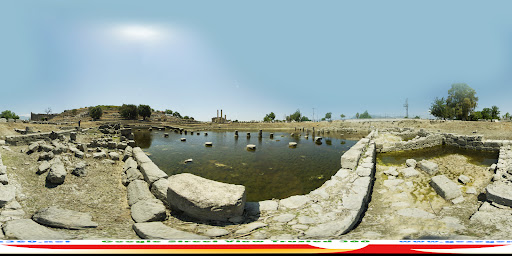
Fethiye Letoon Archaeological Site
3-Stop Personal Tour Plan
VISIT INFO
Museum visit information
Address
Kumluova, 48370 Seydikemer/Muğla, Türkiye
Ticket
Not listed
Opening Hours
- Opening08:30
- Closing18:00
- Box office closing17:30
- Closed daysOpen every day
Phone
02526141150
GUIDES
Before you visit
Frequently Asked Questions (Fethiye Letoon Archaeological Site)
Opening: 08:30 · Closing: 18:00 · Box office closing: 17:30 · Closed days: Open every day
Neleri Meşhur İşbirliği
Fethiye Letoon Archaeological Site çevresinde ne meşhur?
Neleri Meşhur'da bakın — lezzet, gezi ve yöresel keşif tek yerde.
MUĞLA
Explore in the same city

Afife Kuyusu
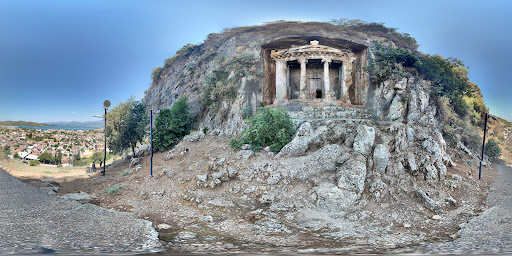
Amyntas Rock Tombs
