 MüzeKartGeçerli
Tokat Museumvisitor guide.
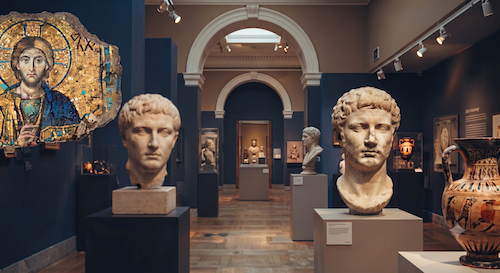
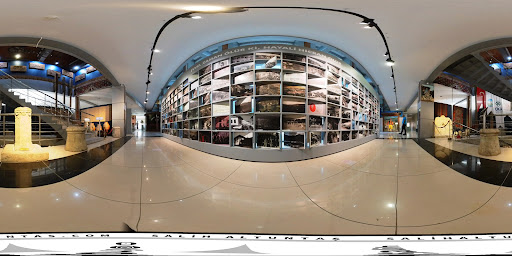
Museological activities in Tokat first commenced in 1926 when retired schoolteacher Halis Turgut Cinlioğlu gathered historical antiquities and cultural artifacts from the surrounding region and stored them within the 13th-century Anatolian Seljuk Gökmedrese. Classified among composite museums displaying archaeological and ethnographic artifacts along with coins, Tokat Museum was relocated in 2012 from Gökmedrese—where it had provided continuous service since 1926—to the historical Tokat Bedesten situated along Sulu Sokak. Following exhibition arrangements carried out within the Bedesten building in accordance with contemporary museology, Tokat Museum was officially opened to visitation on September 18, 2012. Today's museum building, Tokat Bedesten, is located on Sulu Sokak in Tokat provincial center. Lacking a foundation inscription giving its exact construction date, architectural characteristics indicate it was built during the reign of Ottoman Sultan Mehmed I in the 15th century. Tokat Bedesten consists of three distinct volumes: the central bedesten hall flanked by covered bazaar (arasta) wings along its eastern and western facades. The bedesten hall is divided into nine bays by four pairs of piers, each bay roofed with a brick masonry dome. Entered via portals situated on the north and south facades, it features two additional internal gates opening directly into the adjacent arastas to the east and west. In the covered bazaar (arasta) sections, which were kept lower than the bedesten walls, twenty shops face one another. Constructed of rubble stone and brick, the arches and vaults of the Tokat Bedesten are executed entirely in brick masonry. Also widely known as Arastalı Bedesten, the central bedesten volume has been arranged as the archaeology hall. Uncovered through excavations and researches demonstrating that the history of Tokat extends back to 4000 BC, antiquities belonging to numerous civilizations that lived here are exhibited in our archaeology hall. Archaeological holdings comprise finds from Maşathöyük excavations in Yalınyazı Town of Zile District, ongoing excavation finds from ancient Comana, artifacts recovered during rescue excavations conducted by the museum, and items acquired through donations, purchases, or confiscations across provincial districts and villages. Important artifacts displayed in the archaeology hall include Hittite cuneiform tablets from Maşathöyük, a Hellenistic sword, and Roman bronze statuettes depicting Apollo, Poseidon, Nike, and sacred animals of the gods. The coin section of Tokat Museum is housed inside the archaeology hall. The museum occupies an exceptional standing among Anatolian museums in coin numbers and diversity. The largest portion comprises Anatolian Seljuk coins discovered during a rescue excavation in Niksar in 1982. Entirely composed of silver coins, the significance of this hoard stems not only from its size, but also from the diverse mint cities and sultans it encompasses. Another major portion comprises Ottoman and Venetian gold coins unearthed in 1985 during excavations for the provincial government annex. Furthermore, our museum possesses a wide collection spanning from electrum coins—the earliest coins minted in history—to the twilight of the Ottoman Empire, representing all civilizations that ruled Tokat. Of the covered bazaar wings, the western arasta has been curated as the ethnography hall. Rich in ethnographic artifacts—implements representing the lifeways and culture of the people, alongside items of scientific and religious value requiring conservation—our museum maintains a rich collection defining Tokat ethnography. Among the prominent masterpieces displayed in the ethnography hall are a handwritten Quran manuscript dated 587 AH (1191 AD) from the Anatolian Seljuk Period—known as the oldest Quran manuscript in Anatolian museums and libraries—and historic Tokat ceramics, which recent scholarly investigations have established as Anatolia's fourth major ceramic production center after İznik, Kütahya, and Çanakkale. Inside the ethnography hall, an authentic recreation of a traditional hand-block printing textile (yazma) workshop has been created, commemorating Tokat's 600-year textile craft. In a street-facing chamber south of the western arasta, an authentic coppersmith workshop recreation illustrates Tokat's prominent Ottoman copperworking trade. Portions of the eastern arasta serve as artifact storage and administrative offices. In the front courtyard, stone lapidary works and large storage jars (pithoi) are displayed: Roman-era funerary stelae, sarcophagi, and column capitals occupy one side, while Seljuk and Ottoman cenotaphs and headstones are exhibited on the other. DOWNLOAD MUSEUM BROCHURE NEARBY MUSEUMS TOKAT ATATÜRK HOUSE AND ETHNOGRAPHY MUSEUM TOKAT LATİFOĞLU MANSION
Let AI build your tour plan
Tokat Museum
3-Stop Personal Tour Plan
VISIT INFO
Museum visit information
Address
Camiikebir, 60200 Tokat Merkez/Tokat, Türkiye
Ticket
Not listed
Opening Hours
- Opening08:00
- Closing16:45
- Box office closing16:15
- Closed daysMonday
Phone
03562141509
Frequently Asked Questions (Tokat Museum)
Opening: 08:00 · Closing: 16:45 · Box office closing: 16:15 · Closed days: Monday
Neleri Meşhur İşbirliği
Tokat Museum çevresinde ne meşhur?
Neleri Meşhur'da bakın — lezzet, gezi ve yöresel keşif tek yerde.
TOKAT
Explore in the same city
Latifoğlu Konağı