 MüzeKartGeçerli
Perge Archaeological Sitevisitor guide.
Perge, located within the Aksu district boundaries of Antalya Province, lies 17 km east of the city center. Archaeological research conducted at the site has demonstrated that the prehistoric heritage of this city renowned for its monumental architecture extends back to the Early Bronze Age, in light of ceramic specimens unearthed upon the acropolis. The excavation history of the city, referenced as 'Parha' in Hittite cuneiform tablets, commenced in 1946 under Ord. Prof. Dr. Arif Müfid Mansel. Over subsequent decades, excavations conducted by Prof. Dr. Jale İnan during the 1970s were taken over by Prof. Dr. Haluk Abbasoğlu in the 1990s. In addition, excavations at Perge have been directed by the Antalya Museum Directorate since 2012, and excavation, restoration, and conservation works continue to be actively sustained by our Directorate. Having experienced three major epochs throughout its history, Perge celebrated its first splendid zenith during the Hellenistic Period. Conceived as a planned city in the 3rd century BC, this era is embodied by the Hellenistic Towers that still stand firmly upright today. Nevertheless, Perge experienced its golden age under Roman Imperial rule. Perge fully capitalized on the blessings of the period of peace and affluence known as the 'Pax Romana (Roma Barışı)' in the 2nd–3rd centuries AD, combining these opportunities with its strategic geopolitical setting to attain a prosperous standard of living. During this epoch, the city witnessed extensive architectural remodeling; major public edifices that form today's primary focal points for visitors—including the Theater, Stadium, City Gate, Agora & Macellum, Palaestra—alongside aesthetic aquatic monuments such as Roman Baths, Water Channels, and Monumental Fountains were erected during the Roman Period. Experiencing its final flourishing phase under the Eastern Roman (Byzantine) Empire, Perge became a frequent destination for eminent saints under Christianity's influence; visited by St. Paul, Perge served as the starting point of the St. Paul route extending toward Pisidian Antioch, magnificent basilicas were erected in the 5th and 6th centuries AD, and Perge achieved the status of a 'Metropolitan City'. In this context, excavations of the Theater, South Bath, Agora & Macellum, Kestros Fountain, and Colonnaded Main Street were conducted between 1946 and 2012; excavations directed by our Directorate completed the Colonnaded Western Street acting as the city's second artery along with its parallel water channel and the Caracalla Fountain (including main facade of palaestra and nymphaeum pool), fully opening the route to the Western Necropolis. Within site management, eastern porticoes of the Main Street were improved, and comprehensive rehabilitation from the Roman Gate to the City Square was accomplished, encompassing Hellenistic Towers and Agora. In 2017, Perge Theater was also opened to visits. DOWNLOAD MUSEUM BROCHURE NEARBY MUSEUMS OLYMPOS ARCHAEOLOGICAL SITE MYRA ARCHAEOLOGICAL SITE PATARA ARCHAEOLOGICAL SITE ST. NICHOLAS MONUMENT MUSEUM PHASELIS ARCHAEOLOGICAL SITE SIDE ARCHAEOLOGICAL SITE
Let AI build your tour plan
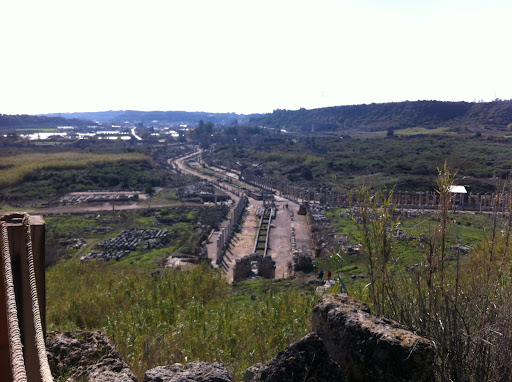
Perge Archaeological Site
3-Stop Personal Tour Plan
VISIT INFO
Museum visit information
Address
Barbaros, Perge Cad., 07112 Serik/Antalya, Türkiye
Ticket
Not listed
Opening Hours
- Opening08:00
- Closing17:00
- Box office closing16:30
- Closed daysOpen every day
Phone
02424262748
GUIDES
Before you visit
Frequently Asked Questions (Perge Archaeological Site)
Opening: 08:00 · Closing: 17:00 · Box office closing: 16:30 · Closed days: Open every day
Neleri Meşhur İşbirliği
Perge Archaeological Site çevresinde ne meşhur?
Neleri Meşhur'da bakın — lezzet, gezi ve yöresel keşif tek yerde.
ANTALYA
Explore in the same city
Alanya Atatürk Evi Museum
Alanya Castle