 MüzeKartGeçerli
Milet Museumvisitor guide.
LEGENDS CONCERNING THE FOUNDATION OF THE CITY OF MILETOS While legends regarding the distant past must be approached with caution, Pausanias provides an important account regarding the origin of the Milesians (Paus. 7.2.5): 'During the reign of Anax, a native ruler, and for the next two generations, they called their lands Anaktoria. When Miletos arrived with a Cretan army, he changed both the region's name and the city's name to Miletos. Miletos and his men had fled Crete to escape Minos, son of Europa. The Carians, the ancient masters of these lands, united with the Cretans in order to survive.' In another version recounted by Pausanias, the sons of Codrus, Neleus and Medon, engaged in a succession struggle; Neleus, forced to depart Athens, set out toward the coast of Western Anatolia and founded Miletos for himself (Pausanias 7.2.1-4). Although unprovable, these accounts represent some of the few oral traditions surviving regarding the foundation of Miletos. HISTORY OF THE CITY Following the abandonment of the Archaic Acropolis after the Persian invasion of 494 BC, the Hellenistic City began taking shape around the Lion Harbor and theater. In the Roman period, the Hellenistic city's layout and dimensions were preserved, yet building activity witnessed immense growth. The Faustina Baths, Humei Tepe Baths, theater, harbor monument, harbor gate, Capito Baths, gymnasium, South Agora gate, west agora, stadium, and warehouse complexes are major public edifices dating to the Roman Period. The city began losing its significance as a premier port during this era as it silted up with alluvium borne by the Büyük Menderes River. From 538 AD onwards, Miletos became an episcopal see, shrinking progressively until confined to the area around the theater and fortress. Named Palatia in the Byzantine Period, Miletos came under Turkish dominion in the 13th century and was called Balat in the Beyliks and Ottoman eras. CAPITAL OF PHILOSOPHY, SCIENCE, AND ART Ancient Greek civilization's advancement in science originated through the Milesian school. Anaximenes of Miletus sought to explain existence, Anaximander inscribed universal laws not dependent on deities onto stones, while Hecataeus distinguished himself in geography, entering history as the first person to draw a world map. Thales, regarded as the father of philosophy, learned to calculate solar eclipses following his journey to Egypt, also proposing that matter comprises fundamental elements and paving the way toward the atomic concept. A ticket purchased for Miletus Museum also grants admission to Miletus Archaeological Site. DOWNLOAD MUSEUM BROCHURE NEARBY MUSEUMS AYDIN ARCHAEOLOGY MUSEUM PRIENE ARCHAEOLOGICAL SITE APHRODISIAS MUSEUM AND ARCHAEOLOGICAL SITE DIDYMA ARCHAEOLOGICAL SITE KARACASU ETHNOGRAPHY MUSEUM ALABANDA ARCHAEOLOGICAL SITE
Let AI build your tour plan
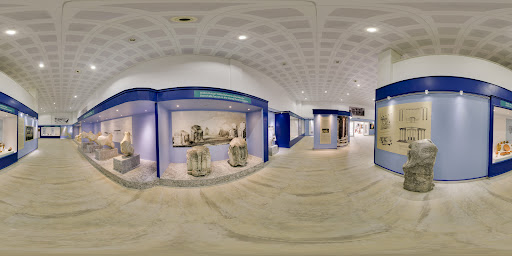
Milet Museum
3-Stop Personal Tour Plan
VISIT INFO
Museum visit information
Address
Yenihisar Aydın TR, Balat, 09290 Didim, Türkiye
Ticket
Not listed
Opening Hours
- Monday09:00–18:30
- Tuesday09:00–18:30
- Wednesday09:00–18:30
- Thursday09:00–18:30
- Friday09:00–18:30
- Saturday09:00–18:30
- Sunday09:00–18:30
Phone
02568755206
Frequently Asked Questions (Milet Museum)
Monday: 09:00–18:30 · Tuesday: 09:00–18:30 · Wednesday: 09:00–18:30 · Thursday: 09:00–18:30 · Friday: 09:00–18:30 · Saturday: 09:00–18:30 · Sunday: 09:00–18:30
Neleri Meşhur İşbirliği
Milet Museum çevresinde ne meşhur?
Neleri Meşhur'da bakın — lezzet, gezi ve yöresel keşif tek yerde.
AYDIN
Explore in the same city
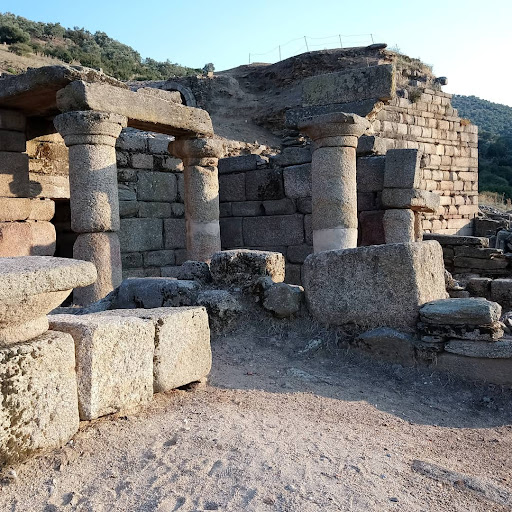
Alabanda Archaeological Site
Alinda Archaeological Site