 MüzeKartGeçerli
Metropolis Archaeological Sitevisitor guide.
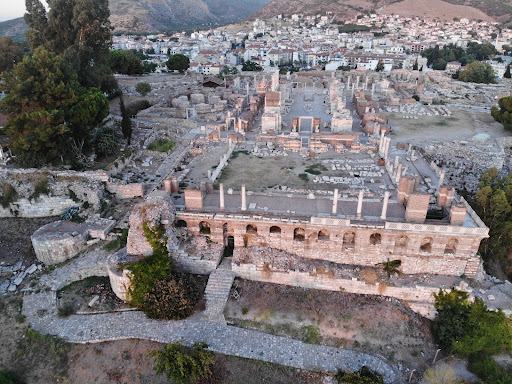
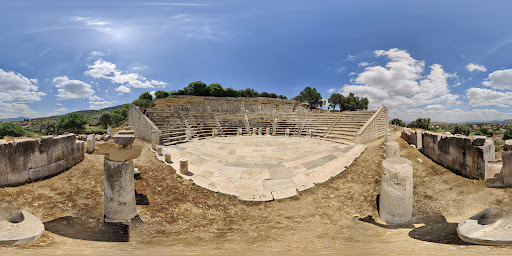
Nestled between Yeniköy and Özbey villages in İzmir's Torbalı district, the ancient city of Metropolis leans against Mount Gallesion, deriving its name from the mother goddess Meter Gallesia. First settlement traces around Metropolis date back to the Stone Age (Neolithic) at Tepeköy, Dedecik, and Kuşçuburun. In Late Antiquity, Metropolis became an episcopal seat; however, shrinking due to wars and economic hardship, a defensive citadel was erected. From the 14th century, when the region fell to the Aydınoğulları Principality, Metropolis came under Aydınoğulları administration, but could no longer endure at its ancient site and migrated to Torbalı. Theater Constructed in the Hellenistic Period, the theater's orchestra was paved with marble slabs and its stage building was enlarged in the Roman Period. Restored in 2000–2001, the theater seats approximately 4,000 spectators. Peristyle House Uncovered during excavations on the theater's southern slope investigating the link between theater and urban center, the peristyle courtyard house illuminates previously unknown facets of civic daily life. The central spacious courtyard is paved with marble slabs and enclosed by four colonnades on each side. Numerous surrounding rooms with painted plaster walls and rich artifact assemblages reveal it belonged to an affluent Metropolis citizen in the Roman Period. Acropolis Strategically situated for defense, the Acropolis covers 16,000 m2 dominating the Torbalı plain, offering sweeping views of the surrounding countryside. Excavations and soundings established that the Acropolis hill was inhabited from 3000 BC, enclosed by formidable defensive walls in the Hellenistic era. Bouleuterion (Council House) In democratically governed cities, the Bouleuterion was the public hall where council members elected by free citizens convened to deliberate and resolve municipal affairs. Erected in the mid-2nd century BC in a square plan, Metropolis Bouleuterion accommodates 350 persons. Stoa Stoas built for shelter from rain and sunshine hosted religious rituals, political and philosophical assemblies, and commercial and cultural gatherings. The Doric two-aisled stoa was built in the 2nd century BC. Names of wealthy benefactors who contributed financially to its construction are inscribed upon the front columns, representing early examples of civic sponsorship. Upper Bath and Gymnasium Gymnasia were ancient public establishments providing youth with physical and intellectual instruction. The Metropolis Gymnasium is documented in Augustan inscriptions. An inscription dating to the 2nd century BC names a woman, Alexandra Mirton, as gymnasiarch. Lower Bath-Palaestra Dating to the Roman Imperial Period, this splendid bath complex features full marble wall revetments and specially designed stepped plunge pools flanking its central hall. DOWNLOAD MUSEUM BROCHURE NEARBY MUSEUMS EPHESUS ARCHAEOLOGICAL SITE PERGAMON ACROPOLIS EPHESUS MUSEUM ST. JOHN SITE AGORA SITE EPHESUS TERRACE HOUSES
Let AI build your tour plan
Metropolis Archaeological Site
3-Stop Personal Tour Plan
VISIT INFO
Museum visit information
Address
Yeniköy, Sevgi Yolu Sk., 35860 Torbalı/İzmir, Türkiye
Ticket
Not listed
Opening Hours
- Opening08:30
- Closing17:30
- Box office closing17:00
- Closed daysOpen every day
Phone
02324890796
GUIDES
Before you visit
Frequently Asked Questions (Metropolis Archaeological Site)
Opening: 08:30 · Closing: 17:30 · Box office closing: 17:00 · Closed days: Open every day
Neleri Meşhur İşbirliği
Metropolis Archaeological Site çevresinde ne meşhur?
Neleri Meşhur'da bakın — lezzet, gezi ve yöresel keşif tek yerde.
İZMİR
Explore in the same city
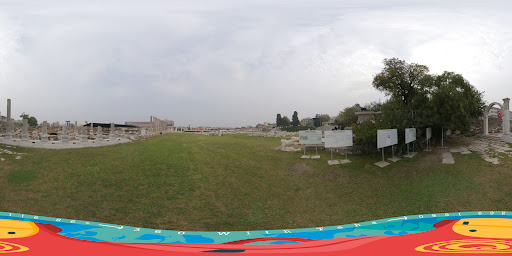
Agora Archaeological Site
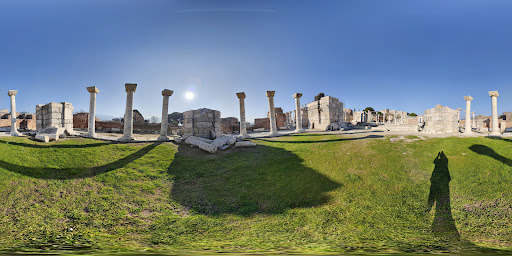
Ayasuluk KALESİ