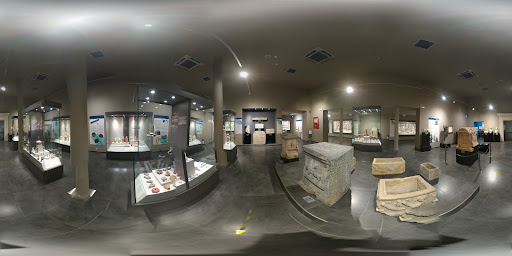
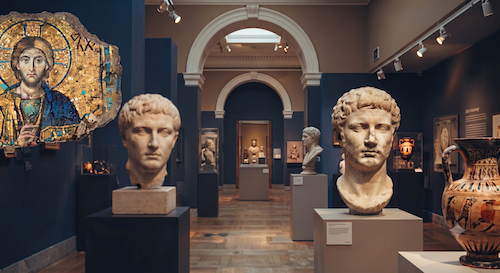
 MüzeKartGeçerli
Limyra Archaeological Sitevisitor guide.
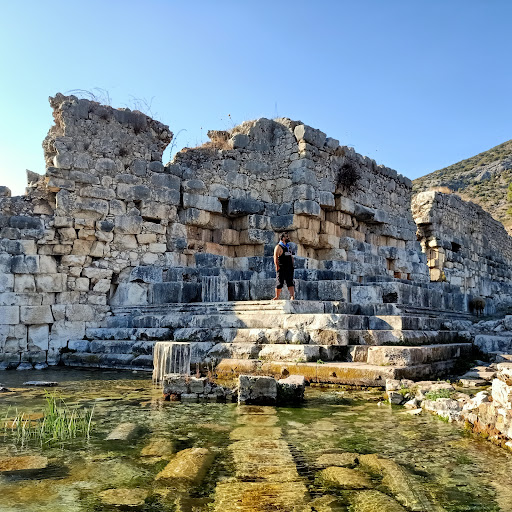
Located within Saklısu Neighborhood, Finike District, Antalya Province, the ancient city of Limyra encompasses the Acropolis on the southern foothills of Toçak Mountain containing early structures, alongside the plain immediately south enclosed within Roman and Eastern Roman (Byzantine) defensive walls, now separated by the highway. Limyra's name appears as "Zemuri" in Lycian inscriptions, proving continuous human habitation since at least the 5th century BC. The city enjoyed its most brilliant epoch in the first half of the 4th century BC during the reign of Lycian King Pericles, when it became the regional capital. Historical records reveal that while Pericles strived to forge the Lycian League and expand his dominion, nominal Persian suzerainty existed; yet this hegemony remained superficial, allowing Limyra immense political autonomy like other cities. Experiencing another flourishing era in the 2nd–3rd centuries AD, Limyra was reconstructed following destructive earthquakes. Serving as an episcopal seat during Byzantine rule, the city was eventually abandoned following Arab incursions in the 8th–9th centuries AD. The Acropolis to the north comprises an inner citadel and lower fortress. The lower citadel contains walls, cisterns, a church, and the monumental Heroon of Pericles. Dating to the 4th century BC, this monumental tomb of King Pericles is notable for resembling the Nereid Monument at Xanthos, with major sculptural components displayed in the Antalya Museum. At the point where the acropolis meets the plain beside the Turunçova–Kumluca highway stands the theater, Hellenistic in origin and extensively renovated in 141 AD. South of the highway, the site divides into two islands bisected by the Limyros Stream. West of the Limyros within Early Byzantine fortifications lie older monuments: the Ptolemaion was discovered inside the southern wall, whose Hellenistic architectural and sculptural fragments are showcased in Antalya Museum. Another paramount monument is the cenotaph erected in 4 AD for Gaius Caesar, adopted son of Emperor Augustus, who died at Limyra en route from Jerusalem to Rome. His remains were conveyed to Rome, and this monumental empty tomb (cenotaph) was raised in his memory. Limyra harbors over 400 rock-cut tombs, ranking among the richest Lycian necropolises, many bearing Lycian inscriptions. DOWNLOAD MUSEUM BROCHURE NEARBY MUSEUMS OLYMPOS ARCHAEOLOGICAL SITE MYRA ARCHAEOLOGICAL SITE PERGE ARCHAEOLOGICAL SITE PATARA ARCHAEOLOGICAL SITE PHASELIS ARCHAEOLOGICAL SITE SIDE ARCHAEOLOGICAL SITE
Let AI build your tour plan
Limyra Archaeological Site
3-Stop Personal Tour Plan
VISIT INFO
Museum visit information
Address
Sahilkent, 07940 Finike/Antalya, Türkiye
Ticket
Not listed
Opening Hours
- Opening08:00
- Closing17:00
- Box office closing16:30
- Closed daysOpen every day
Phone
Not listed
GUIDES
Before you visit
Frequently Asked Questions (Limyra Archaeological Site)
Opening: 08:00 · Closing: 17:00 · Box office closing: 16:30 · Closed days: Open every day
Neleri Meşhur İşbirliği
Limyra Archaeological Site çevresinde ne meşhur?
Neleri Meşhur'da bakın — lezzet, gezi ve yöresel keşif tek yerde.
ANTALYA
Explore in the same city
Alanya Atatürk Evi Museum
Alanya Castle