 MüzeKartGeçerli
Laodicea Archaeological Sitevisitor guide.
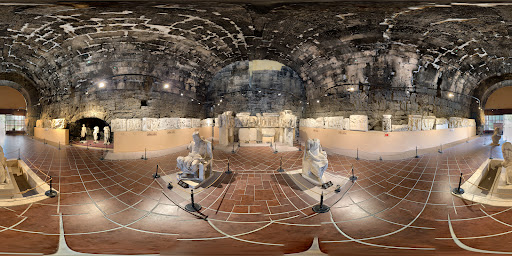
ONE OF THE SEVEN FAMOUS CHURCHES OF ANATOLIA IS HERE Established south of the Lycus River, this city is commonly cited in ancient texts as 'Laodikeia ad Lycum' (Laodicea on the Lycus). It was known as 'Ladik' in Seljuk and Ottoman times. Founded by Antiochus II between 261 and 253 BC, the city was named after his wife Laodice. In 130/129 BC, the region became fully subject to Rome. Repeatedly damaged by earthquakes and rebuilt in every era, the city was abandoned following a catastrophic earthquake during the reign of Emperor Phocas (602–610 AD), with its population relocating to the northern slopes of Mount Salbacus (Babadağ), to Denizli-Kaleiçi and Hisarköy. Excavations in Laodicea have revealed uninterrupted settlement from the Early Chalcolithic (Copper Age) around 5500 BC until the 7th century AD. Roman statesman and orator Cicero arrived here in 50 BC, residing for a time to oversee legal affairs. Around this period, the Romans made Laodicea the center of the Cibyra conventus. Under Emperor Caracalla, high-quality coinage was minted, and monumental structures were built with civic contributions. Laodicea is of utmost importance to the Christian world, having served as a pilgrimage center from the 4th century AD onward. Mentioned in the New Testament as one of the seven churches of Asia, the Church of Laodicea was built under Constantine the Great (306–337 AD) following the legalization of Christianity in 313 AD. The city's primary source of wealth was trade, situated at a major road junction, led above all by textiles, alongside marble, grain, and livestock trade. Laid out on a Hippodamian grid plan across roughly 5 square kilometers, surviving structures include Anatolia's largest stadium (285x70 m), 2 theaters, 4 bath complexes, 5 agoras, 5 nymphaea, 2 monumental gates, a council house, temples, churches, and a colonnaded street, bordered on all four sides by necropolises. WHILE YOU ARE HERE Honaz Mountain National Park around Mount Honaz is rich in flora, fauna, and geology, harboring rare endemics and 64 bird species. Its slopes and waterfalls are ideal for hiking and camping. DOWNLOAD MUSEUM BROCHURE NEARBY MUSEUMS PAMUKKALE ARCHAEOLOGICAL SITE HIERAPOLIS (PAMUKKALE) ARCHAEOLOGY MUSEUM DENİZLİ ATATÜRK AND ETHNOGRAPHY MUSEUM DENİZLİ CITY MUSEUM TRIPOLIS ARCHAEOLOGICAL SITE
Let AI build your tour plan

Laodicea Archaeological Site
3-Stop Personal Tour Plan
VISIT INFO
Museum visit information
Address
Goncalı, R4P5+HW, 20000 Merkez/Pamukkale/Denizli, Türkiye
Ticket
Not listed
Opening Hours
- Opening08:00
- Closing17:30
- Box office closing17:00
- Closed daysOpen every day
Phone
02582410866
Frequently Asked Questions (Laodicea Archaeological Site)
Opening: 08:00 · Closing: 17:30 · Box office closing: 17:00 · Closed days: Open every day
Neleri Meşhur İşbirliği
Laodicea Archaeological Site çevresinde ne meşhur?
Neleri Meşhur'da bakın — lezzet, gezi ve yöresel keşif tek yerde.
DENİZLİ
Explore in the same city
Denizli Kent Museum
DENİZLİ TRIPOLIS ÖRENYERİ