 MüzeKartGeçerli
Harran Archaeological Sitevisitor guide.
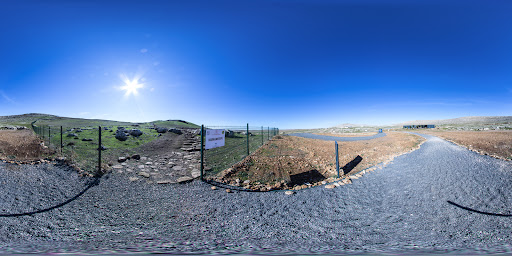
It is stated that this is the place mentioned as Charan in the Old Testament. Islamic historians trace the city's foundation to Cainan, grandson of the Prophet Noah, or to Aran (Haran), brother of the Prophet Abraham. Thirteenth-century historian Ibn Shaddad notes that the Prophet Abraham dwelled in this city prior to departing for Palestine. For this reason, Harran was also called the City of Abraham; he records that Abraham's house, a masjid bearing his name, and a stone against which he rested existed in Harran. The most accurate insights regarding Harran's history derive from archaeological excavations. Harran's name first appears as 'Har-ra-na' or 'Ha-ra-na' in cuneiform tablets from the early 2nd millennium BC found at Kültepe and Mari. Ebla tablets discovered in northern Syria likewise refer to Harran as 'Ha-ra-na'. Mid-2nd millennium BC Hittite tablets record that the Moon God (Sin) and the Sun God of Harran were invoked as witnesses to a treaty concluded between Hittites and Mitanni. Harran is located at the crossroads of vital trade routes arriving from Northern Mesopotamia and connecting to the west and northwest. Because of this strategic location, Harran served as a prominent waypoint for Assyrian merchants conducting extensive trade relations with Anatolia. For millennia, trade between Anatolia and Mesopotamia flowed through Harran, fostering a rich and deeply rooted cultural legacy. Harran was world-renowned as the premier sanctuary of ancient Mesopotamian paganism (Sabianism), in which the Moon, Sun, and planets were venerated as divine. Consequently, astronomical science achieved great advancement in Harran. While nearby Urfa became a principal cradle of Christianity, Sabianism endured in Harran from Assyrian, Babylonian, and Hittite epochs until the 11th century AD. The 'Harran School' ranks as one of the world's three great historical schools of philosophy. Today, with the Cullab and Deysan rivers dried up, Harran stands with its 5,000-year history in the midst of an arid plain. Its distinctive conical beehive houses, mound, fortress, city walls, and diverse architectural ruins, complemented by brilliant starlit night skies, captivate travelers. Euphrates waters channeled to the Harran Plain via the Atatürk Dam and Urfa Tunnels will restore Harran to its historic fertility and lush greenness. Situated 44 kilometers southeast of Şanlıurfa, historic Harran, visited annually by thousands of local and international visitors, was founded at the center of the Harran Plain named after it. DOWNLOAD MUSEUM BROCHURE NEARBY MUSEUMS ŞANLIURFA CASTLE GÖBEKLİTEPE ARCHAEOLOGICAL SITE ŞANLIURFA ARCHAEOLOGY MUSEUM KARAHANTEPE ARCHAEOLOGICAL SITE HALEPLİBAHÇE MOSAIC MUSEUM
Let AI build your tour plan

Harran Archaeological Site
3-Stop Personal Tour Plan
VISIT INFO
Museum visit information
Address
Harran evi Ibniteymiye mah.ibniteymiye kume evler, 63510 Harran/Şanlıurfa, Türkiye
Ticket
Not listed
Opening Hours
- Opening08:30
- Closing17:30
- Box office closing17:00
- Closed daysOpen every day
Phone
04143131588
Frequently Asked Questions (Harran Archaeological Site)
Opening: 08:30 · Closing: 17:30 · Box office closing: 17:00 · Closed days: Open every day
Neleri Meşhur İşbirliği
Harran Archaeological Site çevresinde ne meşhur?
Neleri Meşhur'da bakın — lezzet, gezi ve yöresel keşif tek yerde.
ŞANLIURFA
Explore in the same city
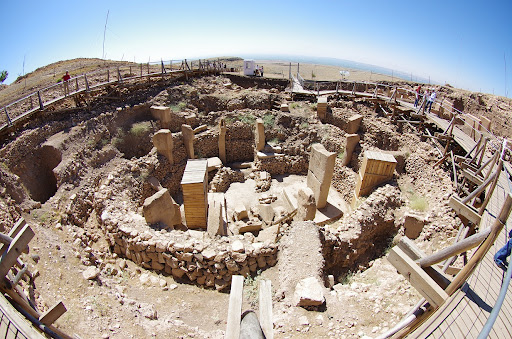
Göbeklitepe Archaeological Site
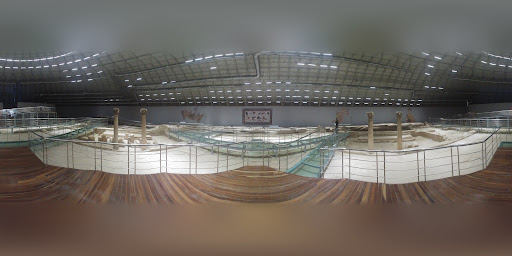
Haleplibahçe Mozaik Museum