 MüzeKartGeçerli
Hadrianopolis Archaeological Sitevisitor guide.
The ancient city known as "Paphlagonian Hadrianopolis" encompasses the locality named "Viranşehir" and surrounding agricultural lands across Budaklar, Büyükyaylalar, Çaylı, and Beytarla villages, situated 3 km west of Eskipazar district center in Karabük Province. Hadrianopolis ancient city lies at the boundary of Paphlagonia, Bithynia, and Galatia regions, northeast of Crateia. Surface surveys and archaeological excavations conducted since 2003 reveal that Hadrianopolis, situated on vital trade routes and commercial highways across Paphlagonia, was an eminent commercial market hub in Roman times, explaining why the city was continuously settled throughout history. Hadrianopolis was attached to the province of Galatia in 5 BC under the name "Kaisareis Proseilemmitai". From the 2nd century AD onward, the city's name was changed to "Kaisareis Hadrianopolitai". While whether the city was renamed directly by Hadrian remains entirely uncertain, the presence of an imperial cult is documented by an inscription referring to Hadrian, son of God Hadrian, grandson of God Trajan, and great-grandson of God Nerva. Surviving monuments indicate that the ancient city attained exceptional prominence during Late Roman and Byzantine epochs. In the Byzantine period, Hadrianopolis exercised an extensive administrative territory extending as far as Karabük. Inscriptions demonstrate that Hadrianopolis was an active trading market located on commercial arteries. At an uncertain date, a city named Sora was founded and partitioned from Hadrianopolis's borders. In the Early Byzantine period, it was initially attached to Paphlagonia. Under Theodosius I (379–395), it was assigned to the newly created province of Honorias. In 535 AD, Byzantine administrative reorganization reassigned the city administratively to Paphlagonia while religious ecclesiastical authority remained with Honorias, attached to the Church of Honorias. Arriving in Hadrianopolis at age 32 and dwelling atop a pillar in the city's ancient necropolis for roughly 50 years, Saint Alypius the Stylite is of paramount importance in Hadrianopolis's history. A nunnery dedicated to Saint Euphemia was reportedly founded near this column. Around 727 AD, Arab Umayyad raids against neighboring Gangra severely impacted Hadrianopolis, paving the way for its gradual abandonment. Excavations yield scarce data past the 8th century AD. Subsequently, the city came under the dominion of Oghuz Turks, the Anatolian Seljuk State, the Candaroğlu Principality, and finally the Ottoman Empire.
Let AI build your tour plan
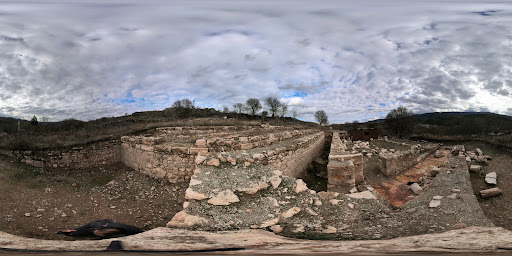
Hadrianopolis Archaeological Site
3-Stop Personal Tour Plan
VISIT INFO
Museum visit information
Address
Hacı Ahmetler, 78402 Budaklar/Eskipazar/Karabük, Türkiye
Ticket
Not listed
Opening Hours
- Opening08:00
- Closing17:00
- Box office closing16:30
- Closed daysOpen every day
Phone
0
Frequently Asked Questions (Hadrianopolis Archaeological Site)
Opening: 08:00 · Closing: 17:00 · Box office closing: 16:30 · Closed days: Open every day
Neleri Meşhur İşbirliği
Hadrianopolis Archaeological Site çevresinde ne meşhur?
Neleri Meşhur'da bakın — lezzet, gezi ve yöresel keşif tek yerde.
KARABÜK
Explore in the same city

800 Yıllık Tabakhane

Cinci Han
