 MüzeKartGeçerli
FİLYOS(TIOS) ÖRENYERİvisitor guide.
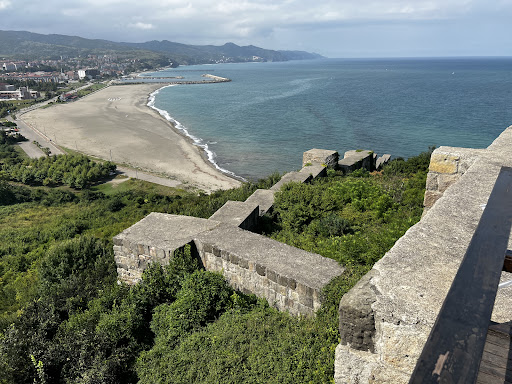
FİLYOS (TIOS) ARCHAEOLOGICAL SITE Established immediately east of where the Billaios (Filyos) River empties into the Black Sea in Antiquity, and serving as one of the coastal transition cities situated between the geographic territories of Eastern Bithynia and Western Paphlagonia, the ancient city of Tios is located today in Filyos Town within the boundaries of Çaycuma District in Zonguldak Province in the Western Black Sea Region of Türkiye. The city is surrounded by Pontos Eukseinos (Black Sea) to the north, Herakleia Pontike (Karadeniz Ereğli) to the west, Amastris (Amasra) to the east, and by the cities of Hadrianopolis (Karabük-Eskipazar), Krateia/Flaviopolis (Bolu-Gerede), and Claudiopolis (Bolu Central) to the south, southwest, and southeast. Known as the sole Greek-Roman city along the Black Sea coastline that has not been buried beneath modern settlements or layers of alluvium, sand, and mud, Tios offers an extraordinary and unique opportunity for researching the urban fabric and developmental layout of an ancient maritime city on this coast. According to the Roman-era geographer Strabo of Amaseia (Amasya, 69 BC – 14 AD) and the Byzantine-era author Eustathios (ca. 1115–1195/6 AD), prior to Hellenic colonization, the Tios settlement was the homeland and capital of a Thracian-origin Paphlagonian tribe called the Kaukonlar who inhabited both banks of the Billaios (Filyos) River. During the expansion of Hellenic colonization in the Black Sea, in the second half of the 7th century BC, the coastal area was transformed into a colony by seafarers arriving on ships from the city of Miletos in the Ionian Region. In his work Ethnika (Ethnic Peoples), the 6th-century Byzantine author Stephanos Byzantinos quotes a passage from another writer named Herennius Philon (ca. 64–141 AD), noting that a Milesian priest named Tios served as the founding leader (ktistes) of the Milesian maritime colonists, implying that this person was the founder who gave his own name to the colony. In the continuation of the same sentence, he presents a second account drawn from Demosthenes of Bithynia. According to this narrative, an individual named Pataros who led migrating peoples from Thrace arrived in Paphlagonia with the migration wave, occupied this territory, and named it 'Tios' meaning 'City of Zeus' in honor of the god Zeus. According to this theory, the word Tios derives from Zeus (Dios), with evidence reflected in New Phrygian inscriptions discovered throughout Phrygia and Galatia. Subjected to the rule of the tyranny in Herakleia Pontike in the 4th century BC, following the world empire of Macedonian King Alexander the Great during the Hellenistic Period, Tios remained under the dominion of regional powers in chronological succession: the Kingdom of Lysimakhos (one of Alexander's generals), the Amastris Synoikismos ruled by Lysimakhos's wife Queen Amastris, the Bithynian Kingdom, and the Pontic Kingdom. During a brief interval when it freed itself from Queen Amastris or Lysimakhos and enjoyed independence, the city struck its own bronze coins reading 'Eleutheria' and depicting 'Goddess Eleutheria'. DOWNLOAD MUSEUM BROCHURE NEARBY MUSEUMS CEHENNEMAĞZI CAVES KARADENİZ EREĞLİ MUSEUM MINING MUSEUM SARIKAYA ROMAN BATH
Let AI build your tour plan
FİLYOS(TIOS) ÖRENYERİ
3-Stop Personal Tour Plan
VISIT INFO
Museum visit information
Address
Sefercik, 67660 Filyos/Çaycuma/Zonguldak, Türkiye
Ticket
Not listed
Opening Hours
- Opening08:30
- Closing17:30
- Box office closing16:00
- Closed daysMonday
Phone
Not listed
Frequently Asked Questions (FİLYOS(TIOS) ÖRENYERİ)
Opening: 08:30 · Closing: 17:30 · Box office closing: 16:00 · Closed days: Monday
Neleri Meşhur İşbirliği
FİLYOS(TIOS) ÖRENYERİ çevresinde ne meşhur?
Neleri Meşhur'da bakın — lezzet, gezi ve yöresel keşif tek yerde.
ZONGULDAK
Explore in the same city
Cehennemağzı Mağaraları

Cumayanı Museum
