 MüzeKartGeçerli
Ayasuluk KALESİvisitor guide.
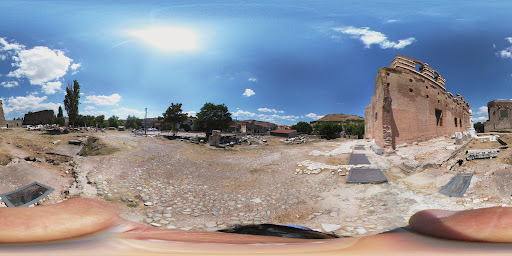
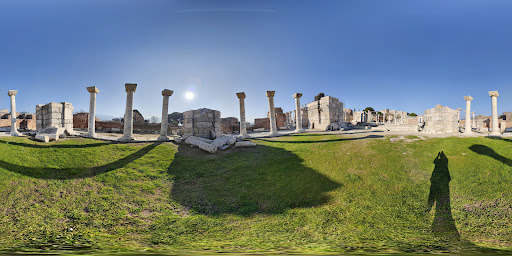
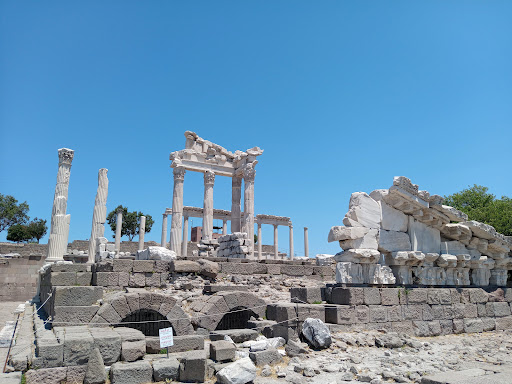
First and Last Ephesus Ayasuluk Hill was known as Apasas during the Arzawa-Mira Kingdom Period and later as Ephesos. It held the status of metropolis until King Croesus of Lydia captured Ephesus (560 BC). With the relocation of the people of Ephesus to Ayasuluk after the 7th century AD, the Basilica of St. John took the place of the former Episcopal Church in Ephesus. Continuing its status as an important city and pilgrimage center during the Byzantine Period, it fell into Turkish hands in 1304. Taking the name "Ayasuluk" after this, the city was the capital of the Aydınoğulları Principality for a period after 1350. In the Early Ottoman Period, it was one of Western Anatolia's prominent harbor cities. Ayasuluk / Selçuk Citadel The citadel walls erected on the highest point of Ayasuluk Hill belong to Seljuk and Ottoman periods. The inner fortress has two entrances, one to the west and the other to the east. Inside the fortress, near the gates, are five cisterns, south of the central part stands a single-domed mosque with a partially intact minaret (Citadel Mosque), and higher up to the west the Bey Mansion and bathhouse from the Turkish Period along with another cistern. Basilica of St. John Covering the southern sector of Ayasuluk Hill, the history of the Basilica of St. John extends back to the Roman Era. According to early 2nd-century Christian tradition and belief, John of Ephesus (St. John the Theologian) was simultaneously Christ's apostle, author of the Gospel and the Apocalypse. Following his demise in Ephesus, he was interred upon the southern slope of Ayasuluk Hill. First, a simple funerary monument was built for him, over which a timber-roofed basilica was built in the 5th century AD. Replacing the basilica ruined by earthquakes at the beginning of the 6th century AD, a new cruciform, domed basilica was commissioned by Emperor Justinian and his consort Theodora (527–565). With the relocation of the people of Ephesus to Ayasuluk after the 7th century AD, the Basilica of St. John took the place of the old Episcopal Church in Ephesus. Preserving its stature as a prominent city and pilgrimage hub in the Byzantine Period, Ephesus fell into Turkish hands in 1304. The city, which took the name "Ayasuluk" thereafter, was for a period after 1350 the capital of the Aydınoğulları Principality. Being one of the port towns of Western Anatolia in the Early Ottoman Period, Ayasuluk subsequently dwindled into a village with the development of Kuşadası and İzmir. The district, which took the name Selçuk during the Republican Period, came to the fore with its touristic characteristics. Turkish Period: After passing into Turkish hands in 1304 and receiving the name "Ayasuluk", the town served as the capital of the Aydınoğulları Principality between 1348 and 1390 during the reigns of Hızır Bey and İsa Bey. The İsabey Mosque, Inner Citadel, bathhouses, mausoleums, madrasahs, and caravanserais erected in Ayasuluk during İsa Bey's reign are outstanding examples of Turkish-Islamic art. With Ayasuluk's annexation into Ottoman territory in 1390, the Aydınoğulları Period drew to an end. Given to Umur Bey by Timur after the Battle of Ankara (1402), a long struggle ensued between Cüneyd Bey and Umur Bey for Ayasuluk. Held by Cüneyd Bey until the reign of Murad II, the town joined Ottoman territory around 1430. Becoming one of the region's second-tier harbor towns in Ottoman lands between 1430 and 1700, Ayasuluk later became deserted and turned into a village with the growth of Kuşadası and İzmir. The Aydın-İzmir railway built after 1860, along with Artemis Temple and Ephesus excavations begun in those years, revived the city. Named "Selçuk" before the Republic, the district continues as the 5th Ephesus. Note: Following Christ's crucifixion, it is said his beloved apostle St. John deemed Jerusalem unsafe for the Virgin Mary and brought her away to Ephesus. DOWNLOAD MUSEUM BROCHURE NEARBY MUSEUMS EPHESUS ARCHAEOLOGICAL SITE PERGAMON ACROPOLIS SITE EPHESUS MUSEUM ST. JEAN ARCHAEOLOGICAL SITE AGORA ARCHAEOLOGICAL SITE EPHESUS TERRACE HOUSES
Let AI build your tour plan
Ayasuluk KALESİ
3-Stop Personal Tour Plan
VISIT INFO
Museum visit information
Address
İsa Bey, 35920 Selçuk/İzmir, Türkiye
Ticket
Not listed
Opening Hours
- Opening09:00
- Closing17:00
- Box office closing16:30
- Closed daysOpen every day
Phone
02328926010
GUIDES
Before you visit
Frequently Asked Questions (Ayasuluk KALESİ)
Opening: 09:00 · Closing: 17:00 · Box office closing: 16:30 · Closed days: Open every day
Neleri Meşhur İşbirliği
Ayasuluk KALESİ çevresinde ne meşhur?
Neleri Meşhur'da bakın — lezzet, gezi ve yöresel keşif tek yerde.
İZMİR
Explore in the same city
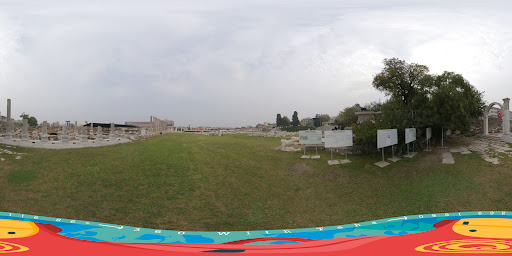
Agora Archaeological Site
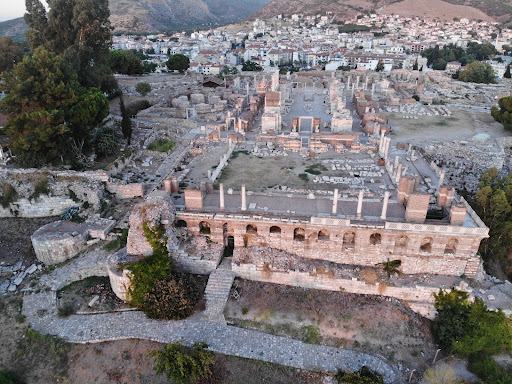
Ayasuluk - St.Jean Archaeological Site