 MüzeKartGeçerli
Antalya Nekropol Museumvisitor guide.
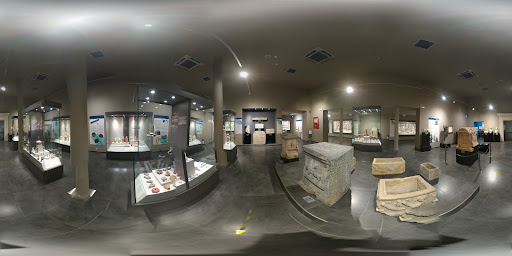
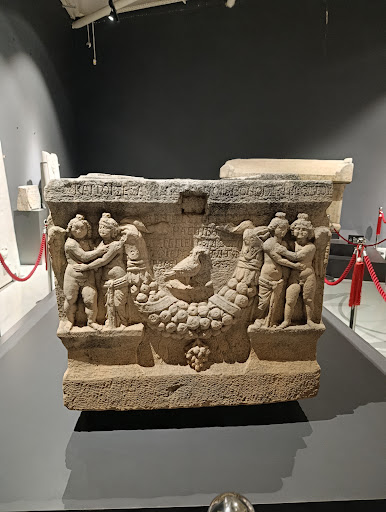
ANTALYA NECROPOLIS MUSEUM In 2005, regarding parcels 1 and 2 of block 12672 located in Antalya city center—an urban area traditionally known by local residents as the Old Eastern Bus Station and Public Market Area—the Antalya Metropolitan Municipality opened the Antalya City Center Eastern Bus Station and Public Market Area Urban Design Architectural Project Competition. According to the competition results organized under the presidency of the Antalya Chamber of Architects, the architectural project prepared by Erkal Architecture (Ozan Erkal – Emre Erkal) was selected first and earned implementation rights. In this scope, construction of the project commenced in 2008, during whose foundation excavation works ancient grave remains and architectural structures came to light. Following comprehensive examinations carried out by expert archaeologists of the Antalya Museum Directorate, it was understood that the area constituted the Eastern Necropolis of the ancient city of Attaleia, whereupon systematic archaeological rescue excavations were initiated by the Antalya Museum Directorate. Initiated in 2008 and conducted virtually uninterrupted until the end of 2010 across an extensive area of 8,450 square meters, rescue excavations uncovered 846 graves, 1,018 inventoried museum artifacts, tens of thousands of study artifacts, and human skeletal remains belonging to nearly two thousand individuals. As a result of these monumental developments, the necropolis precinct was officially registered as a 1st Degree Archaeological Conservation Site by Antalya Conservation Regional Board Decision No. 4866 dated 22.02.2011. Furthermore, in 2020, archaeological excavations were carried out by the Antalya Museum Directorate across an area of roughly 2,500 square meters that had been preserved as a reserve area in previous campaigns, supported by municipal archaeologists, skilled laborers, vehicles, and equipment. In these supplementary excavations, 19 additional graves were uncovered, bringing the total number of graves to 865. The vast majority of uncovered graves were identified as simple cist graves and interments carved directly into the natural bedrock. Alongside these, chamber tombs equipped with dromoi, chamasoria, chamasoria with sarcophagus lids, and terracotta tile slab-covered graves formed other tomb categories, accompanied by abundant cremation urn vessels containing human skeletal remains. Recent scholarly investigations into tomb assemblages and historical archival documents establish that the site was utilized as a cemetery (necropolis) almost continuously from the end of the 4th century BC onward. Yielding rich and invaluable data regarding Antalya's ancient history and funerary customs, finds dating between the end of the 4th century BC and the 3rd century BC are of paramount historical importance. As is well known, the ancient city of Attaleia is conventionally accepted to have been founded in the mid-2nd century BC by Pergamon King Attalus II Philadelphus. Finds predating Attalus II's sovereignty uncovered in excavations at the Attaleia Eastern Necropolis demonstrated once again that the region had been an active settlement area prior to the reign of the Pergamon King. In light of all these developments, the municipal project planned on this site owned by the Antalya Metropolitan Municipality was thoroughly re-evaluated through collective efforts with competent public institutions, academics, and specialists, resolving to preserve and open this uniquely significant archaeological precinct to public visitation under a protective museum roof. Revised by project designers Erkal Architecture according to new conservation specifications, the architectural project titled "Antalya Metropolitan Municipality Cultural and Commercial Center" was formally approved by the Antalya Cultural and Natural Heritage Conservation Board with Decision No. 2251 dated 17.12.2013. According to the board-approved architectural design, to protect the ancient necropolis from weathering elements such as sun, rain, and wind, the site was enclosed by an overhead roof canopy resting upon steel support piers positioned so that none coincided with any ancient grave. To allow visitors to observe graves comfortably, elevated pedestrian walkways raised 1 to 2 meters above the necropolis floor depending on local topography were built. Additionally, three enclosed exhibition galleries covering approximately 820 square meters are located on the museum entrance level. Museum works carried out by the Antalya Metropolitan Municipality Department of City History and Publicity are guided by eminent scholars. The Antalya Necropolis Museum Scientific Board comprises Prof. Dr. Havva Işık and Prof. Dr. Gül Işın from Akdeniz University Archaeology Department, Prof. Dr. Ayla Sevim Erol from Ankara University Anthropology Department, Assoc. Prof. Dr. Nuray Gökalp Özdil from Akdeniz University Ancient Languages and Cultures Department, and Antalya Museum Director Mustafa Demirel. The Scientific Board and project team conduct their endeavors with the mission of "introducing the religious, ethnic, economic, and socio-cultural structure of ancient Antalya to domestic and international visitors with strong scientific grounding, contemporary museology, and modern conservation ethics, thereby contributing to transforming our tourism capital into a true city of museums." To achieve this mission, five core exhibition themes have been formulated: 1- History of Attaleia Eastern Necropolis and Excavations: The Eastern Necropolis and excavation history will be introduced chronologically, utilizing photographs, videos, and drawings created during excavations. The foundation narrative of Attaleia and grave excavations conducted to date around the Eastern Necropolis will be featured here. 2- Ancient Funerary Rituals and Afterlife Beliefs: A funeral home of antiquity will be portrayed, depicting the conveyance of the deceased from home to necropolis via a funerary cortege. Subsequently, the phased placement of the deceased and grave gifts into the tomb, sealing the tomb after burial, grave visitations, and the ultimate moment when archaeologists excavated the tomb centuries later will be presented, recreating the necropolis in the 1st or 2nd century AD across both indoor galleries and the authentic necropolis terrain. The portrayal on the authentic necropolis ground will recreate the conveyance of the body upon a funerary cart along the ancient road, while the funeral home is displayed inside indoor galleries. Sculptures depicting mourning women frequent in ancient art and funeral laments will be presented. In the subsequent indoor gallery, ancient afterlife beliefs will be introduced through digital media, illustrating the journey of the soul to Tartarus and the underworld characters of ancient mythology. 3- Necropolis Tomb Types and Typology: Tomb types within the necropolis will be explained to visitors, with digital interactive displays along walkways providing detailed typological insights. 4- Artifacts Uncovered from the Necropolis and Their Urban Significance: The largest indoor gallery is planned to exhibit archaeological artifacts preserved at Antalya Museum and human skeletons recovered from these excavations, highlighting their art-historical context, reasons for placement in graves, and roles in ancient funerary rituals. 5- Anthropological Studies on Skeletons: Information and statistical data obtained through anthropological studies on excavated skeletons form the foundation for exhibition narratives, illuminating ancient
Let AI build your tour plan
Antalya Nekropol Museum
3-Stop Personal Tour Plan
VISIT INFO
Museum visit information
Address
Yüksekalan, Ali Çetinkaya Cd. No:35/D, 07310 Muratpaşa/Antalya, Türkiye
Ticket
Not listed
Opening Hours
- Opening08:30
- Closing18:00
- Box office closing17:30
- Closed daysOpen every day
Phone
Not listed
GUIDES
Before you visit
Frequently Asked Questions (Antalya Nekropol Museum)
Opening: 08:30 · Closing: 18:00 · Box office closing: 17:30 · Closed days: Open every day
Neleri Meşhur İşbirliği
Antalya Nekropol Museum çevresinde ne meşhur?
Neleri Meşhur'da bakın — lezzet, gezi ve yöresel keşif tek yerde.
ANTALYA
Explore in the same city
Alanya Atatürk Evi Museum
Alanya Castle